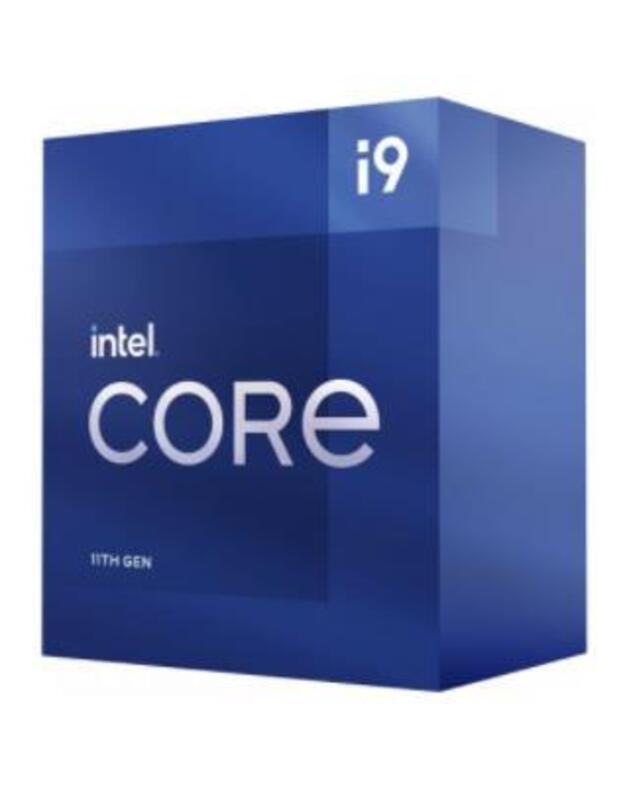
Prekės kodas: 1394649
Turimas kiekis: 10
| Garantija: | 24 |
| Gamintojas: | INTEL |
Intel® Trusted Execution Technology
Intel® Trusted Execution Technology for safer computing is a versatile set of hardware extensions to Intel® processors and chipsets that enhance the digital office platform with security capabilities such as measured launch and protected execution. It enables an environment where applications can run within their own space, protected from all other software on the system.
Intel® Virtualization Technology for Directed I/O (VT-d)
Intel® Virtualization Technology for Directed I/O (VT-d) continues from the existing support for IA-32 (VT-x) and Itanium® processor (VT-i) virtualization adding new support for I/O-device virtualization. Intel VT-d can help end users improve security and reliability of the systems and also improve performance of I/O devices in virtualized environments.
Intel® Virtualization Technology (VT-x)
Intel® Virtualization Technology (VT-x) allows one hardware platform to function as multiple “virtual” platforms. It offers improved manageability by limiting downtime and maintaining productivity by isolating computing activities into separate partitions.
Intel® 64
Intel® 64 architecture delivers 64-bit computing on server, workstation, desktop and mobile platforms when combined with supporting software.¹ Intel 64 architecture improves performance by allowing systems to address more than 4 GB of both virtual and physical memory.
Intel® Clear Video HD Technology
Intel® Clear Video HD Technology, like its predecessor, Intel® Clear Video Technology, is a suite of image decode and processing technologies built into the integrated processor graphics that improve video playback, delivering cleaner, sharper images, more natural, accurate, and vivid colors, and a clear and stable video picture. Intel® Clear Video HD Technology adds video quality enhancements for richer color and more realistic skin tones.
Cache
CPU Cache is an area of fast memory located on the processor. Intel® Smart Cache refers to the architecture that allows all cores to dynamically share access to the last level cache.
Intel® AES New Instructions
Intel® AES New Instructions (Intel® AES-NI) are a set of instructions that enable fast and secure data encryption and decryption. AES-NI are valuable for a wide range of cryptographic applications, for example: applications that perform bulk encryption/decryption, authentication, random number generation, and authenticated encryption.
Idle States
Idle States (C-states) are used to save power when the processor is idle. C0 is the operational state, meaning that the CPU is doing useful work. C1 is the first idle state, C2 the second, and so on, where more power saving actions are taken for numerically higher C-states.
Intel® Turbo Boost Technology
Intel® Turbo Boost Technology dynamically increases the processor's frequency as needed by taking advantage of thermal and power headroom to give you a burst of speed when you need it, and increased energy efficiency when you don’t.
Max Turbo Frequency
Max Turbo Frequency is the maximum single-core frequency at which the processor is capable of operating using Intel® Turbo Boost Technology and, if present, Intel® Turbo Boost Max Technology 3.0 and Intel® Thermal Velocity Boost. Frequency is typically measured in gigahertz (GHz), or billion cycles per second.
Execute Disable Bit
Execute Disable Bit is a hardware-based security feature that can reduce exposure to viruses and malicious-code attacks and prevent harmful software from executing and propagating on the server or network.
Intel® Hyper-Threading Technology
Intel® Hyper-Threading Technology (Intel® HT Technology) delivers two processing threads per physical core. Highly threaded applications can get more work done in parallel, completing tasks sooner.
Instruction Set
An instruction set refers to the basic set of commands and instructions that a microprocessor understands and can carry out. The value shown represents which Intel’s instruction set this processor is compatible with.
Intel® Quick Sync Video
Intel® Quick Sync Video delivers fast conversion of video for portable media players, online sharing, and video editing and authoring.
Intel vPro® Platform Eligibility
The Intel vPro® platform is a set of hardware and technologies used to build business computing endpoints with premium performance, built-in security, modern manageability and platform stability.
Intel® VT-x with Extended Page Tables (EPT)
Intel® VT-x with Extended Page Tables (EPT), also known as Second Level Address Translation (SLAT), provides acceleration for memory intensive virtualized applications. Extended Page Tables in Intel® Virtualization Technology platforms reduces the memory and power overhead costs and increases battery life through hardware optimization of page table management.
Intel® Optane™ Memory Supported
Intel® Optane™ memory is a revolutionary new class of non-volatile memory that sits in between system memory and storage to accelerate system performance and responsiveness. When combined with the Intel® Rapid Storage Technology Driver, it seamlessly manages multiple tiers of storage while presenting one virtual drive to the OS, ensuring that data frequently used resides on the fastest tier of storage. Intel® Optane™ memory requires specific hardware and software configuration.
Enhanced Intel SpeedStep® Technology
Enhanced Intel SpeedStep® Technology is an advanced means of enabling high performance while meeting the power-conservation needs of mobile systems. Conventional Intel SpeedStep® Technology switches both voltage and frequency in tandem between high and low levels in response to processor load. Enhanced Intel SpeedStep® Technology builds upon that architecture using design strategies such as Separation between Voltage and Frequency Changes, and Clock Partitioning and Recovery.
Intel® Secure Key
Intel® Secure Key includes instructions RDRAND and RDSEED and the underlying the hardware implementation used to generate high-quality keys for cryptographic protocols.
Intel® Speed Shift Technology
Intel® Speed Shift Technology uses hardware-controlled P-states to deliver dramatically quicker responsiveness with single-threaded, transient (short duration) workloads, such as web browsing, by allowing the processor to more quickly select its best operating frequency and voltage for optimal performance and power efficiency.
Intel® Deep Learning Boost (Intel® DL Boost) on CPU
A new set of embedded processor technologies designed to accelerate AI deep learning use cases. It extends Intel AVX-512 with a new Vector Neural Network Instruction (VNNI) that significantly increases deep learning inference performance over previous generations.
Instruction Set Extensions
Instruction Set Extensions are additional instructions which can increase performance when the same operations are performed on multiple data objects. These can include SSE (Streaming SIMD Extensions) and AVX (Advanced Vector Extensions).
Intel® Turbo Boost Max Technology 3.0 Frequency
Intel® Turbo Boost Max Technology 3.0 identifies the best performing core(s) on a processor and provides increased performance on those cores through increasing frequency as needed by taking advantage of power and thermal headroom. Intel® Turbo Boost Max Technology 3.0 frequency is the clock frequency of the CPU when running in this mode.
Intel® Turbo Boost Max Technology 3.0
Intel® Turbo Boost Max Technology 3.0 identifies the best performing core(s) on a processor and provides increased performance on those cores through increasing frequency as needed by taking advantage of power and thermal headroom.
Intel® Total Memory Encryption
TME – Total Memory Encryption (TME) helps protect data against exposure via physical attack on memory, such as cold-boot attacks.
Thermal Monitoring Technologies
Thermal Monitoring Technologies protect the processor package and the system from thermal failure through several thermal management features. An on-die Digital Thermal Sensor (DTS) detects the core's temperature, and the thermal management features reduce package power consumption and thereby temperature when required in order to remain within normal operating limits.
Intel® Volume Management Device (VMD)
Intel® Volume Management Device (VMD) provides a common, robust method of hot plug and LED management for NVMe-based solid state drives.
Intel® Gaussian & Neural Accelerator
Intel® Gaussian & Neural Accelerator (GNA) is an ultra-low power accelerator block designed to run audio and speech-centric AI workloads. Intel® GNA is designed to run audio based neural networks at ultra-low power, while simultaneously relieving the CPU of this workload.
Mode-based Execute Control (MBEC)
Mode-based Execute Control can more reliably verify and enforce the integrity of kernel level code.
Intel® Stable IT Platform Program (SIPP)
The Intel® Stable IT Platform Program (Intel® SIPP) aims for zero changes to key platform components and drivers for at least 15 months or until the next generational release, reducing complexity for IT to effectively manage their computing endpoints.
Intel® Boot Guard
Intel® Device Protection Technology with Boot Guard helps protect the system’s pre-OS environment from viruses and malicious software attacks.
Intel® Control-Flow Enforcement Technology
CET - Intel Control-flow Enforcement Technology (CET) helps protect against the misuse of legitimate code snippets through return-oriented programming (ROP) control-flow hijacking attacks.
| Procesoriaus gamintojas | Intel |
| Procesoriaus karta | 12 kartos „Intel® Core™ i9“ |
| Procesoriaus modelis | i9-12900K |
| Procesoriaus šeima | Intel® Core™ i9 |
| Procesoriaus branduoliai | 16 |
| Procesoriaus lizdas | LGA 1700 |
| Taikoma | PC |
| Temų skaičius | 24 |
| Procesoriaus valdymo režimai | 64 bitų |
| Dideli branduoliai | 8 |
| Maži branduoliai | 8 |
| Procesoriaus padidintas dažnis | 5.2 GHz |
| Didelio branduolio padidintas dažnis | 5.1 GHz |
| Didelio branduolio bazinis dažnis | 3.2 GHz |
| Mažo branduolio padidintas dažnis | 3.9 GHz |
| Mažo branduolio bazinis dažnis | 2.4 GHz |
| Procesoriaus podėlis | 30 MB |
| Procesoriaus podėlio tipas | „Smart Cache“ |
| Pakuotės tipas | „Box“ |
| Pridedamas aušintuvas | Ne |
| Didžiausias galingumas paspartintu režimu | 241 W |
| Procesoriaus bazinė galia | 125 W |
| Magistralės tipas | DMI4 |
| Didžiausias DMI takelių skaičius | 8 |
| Procesoriaus palaikomas atminties dažnių juostos plotis (maks.) | 76.8 GB/s |
| Procesoriaus kodinis pavadinimas | Alder Lake |
| Procesorius RAID ARK ID | 134599 |
| Procesoriaus palaikoma didžiausia vidinė atmintis | 128 GB |
| Procesoriaus palaikomi atminties tipai | DDR4-SDRAM/DDR5-SDRAM |
| Atminties kanalai | Dviejų kanalų |
| ECC | Taip |
| Non-ECC | Taip |
| Atminties pralaida (maks) | 76.8 GB/s |
| Diskretusis grafikos adapteris | Ne |
| Integruotas grafikos adapteris | Taip |
| Integruoto grafikos adapterio modelis | Intel UHD Graphics 770 |
| Palaikomos integruoto grafikos adapterio išvestys | DisplayPort 1.4/DisplayPort 1.4a/Embedded DisplayPort (eDP)/Embedded DisplayPort (eDP) 1.4b/HDMI 2.1 |
| Integruoto grafikos adapterio bazinis dažnis | 300 MHz |
| Integruoto grafikos adapterio dinaminis dažnis (maks.) | 1.55 MHz |
| Palaikomų ekranų skaičius (integruota grafika) | 4 |
| Integruoto grafikos adapterio „DirectX“ versija | 12.0 |
| Integruoto grafikos adapterio „OpenGL“ versija | 4.5 |
| Integruoto grafikos adapterio maksimali rezoliucija („DisplayPort“) | 7680 x 4320 pikseliai |
| Integruoto grafikos adapterio maksimali rezoliucija (eDP - integruotas plokščias ekranas) | 5120 x 3200 pikseliai |
| Integruoto grafikos adapterio maksimali rezoliucija (HDMI) | 4096 x 2160 pikseliai |
| Integruoto grafikos adapterio maksimali rezoliucija („DisplayPort“) | 60 Hz |
| Integruoto grafikos adapterio maksimali rezoliucija (eDP - integruotas plokščias ekranas) | 120 Hz |
| Integruoto grafikos adapterio maksimali rezoliucija (HDMI) | 60 Hz |
| Integruoto grafikos adapterio ID | 0x4680 |
| Diskrečiojo grafikos adapterio modelis | Nepasiekiama |
| Funkcinių modulių skaičius | 32 |
| Apsaugos nuo kenkėjiško kodo (Execute Disable Bit) technologija | Taip |
| Šilumos stebėsenos technologijos | Taip |
| Tuščios eigos režimai | Taip |
| Rinkos segmentas | Desktopas |
| Naudojimo sąlygos | Kompiuterizuotos darbo vietos/PC/Client/Tablet |
| Didžiausias „PCI Express“ juostų skaičius | 20 |
| PCI „Express“ angų versija | 4.0/5.0 |
| PCI „Express“ konfigūracijos | 1x16+1x4/2x8+1x4 |
| Palaikomi instrukcijų rinkiniai | AVX 2.0/SSE4.1/SSE4.2 |
| „Direct Media Interface“ (DMI) redakcija | 4.0 |
| CPU konfigūracija (maks.) | 1 |
| Galimos įtaisytos funkcijos | Ne |
| Keičiamas dydis | 1S |
| Šilumos užduoties sprendimo techninės sąlygos | PCG 2020A |
| Eksporto kontrolės klasifikacijos numeris (ECCN) | 5A992.C |
| Prekių klasifikavimo automatizuota sekimo sistema (CCATS) | G167599 |
| „Enhanced Intel®SpeedStep“ technologija | Taip |
| „Intel® Clear Video HD“ technologija („Intel® CVT HD“) | Taip |
| „Intel® Hyper Threading“ technologija („Intel® HT“ technologija) | Taip |
| „Intel® Quick Sync Video“ technologija | Taip |
| „Intel® Speed Shift“ technologija | Taip |
| „Intel® Turbo Boost“ technologija | 2.0 |
| „Intel®Trusted Execution“ technologija | Taip |
| Naujos „Intel® AES“ instrukcijos („Intel® AES-NI“) | Taip |
| „Intel® Turbo Boost Max Technology 3.0“ dažnis | 5.2 GHz |
| „Intel®“ visos atminties šifravimas | Taip |
| „Intel® Gaussian & Neural Accelerator“ („Intel®“ GNA) 3.0 | Taip |
| „Intel®“ kontrolinio srauto vykdymo technologija (CET) | Taip |
| „Intel® Thread Director“ | Taip |
| „Intel® Active Management“ technologija („Intel® AMT“) | Taip |
| „Intel® Boot Guard“ | Taip |
| „Intel® Deep Learning Boost“ („Intel® DL Boost“) on CPU | Taip |
| „Intel® Optane™ Memory Ready“ | Taip |
| „Intel® OS Guard“ | Taip |
| „Intel® Secure Key“ | Taip |
| „Intel® Volume Management Device“ (VMD) | Taip |
| „Intel®“ stabilios IT platformos programa (SIPP) | Taip |
| „Intel®“ standartinės valdymo galimybės (ISM) | Taip |
| „Intel®“ veiklos atkūrimas vienu spustelėjimu | Taip |
| „Intel®“ virtualizavimo technologija su apsauga nuo peradresavimo (VT-rp) | Taip |
| „Intel®64“ | Taip |
| „Intel®Enhanced Halt State“ | Taip |
| „Intel®Stable Image Platform“ programa (SIPP) | Taip |
| „Intel®Turbo Boost Max“ technologija 3.0 | Taip |
| „Intel®Virtualization“ technologija (VT-x) | Taip |
| „Intel®Virtualization“ tiesioginės I/O technologija (VT-d) | Taip |
| „Intel®VT-x with Extended Page Tables“ (EPT) | Taip |
| Režimu paremtas vykdymo valdymas (MBE) | Taip |
| Tinka „Intel® vPro ™“ platformai | Taip |
| „Intel vPro® Enterprise Platform“ tinkamumas | Taip |
| „Intel® Hardware Shield“ tinkamumas | Taip |
| „Intel®“ grėsmių aptikimo technologija (TDT) | Taip |
| „Intel®“ visiškas atminties šifravimas – keli raktai | Taip |
| „T“ formos sujungimas | 100 °C |
| Maksimali veikimo temperatūra | 100 °C |
| Tikslinė rinka | Gaming, Content Creation |
| „OpenCL“ versija | 3.0 |
| „OpenGL“ palaikymas | Taip |
| Būsena | Launched |
| Paleidimo data | Q4'21 |
| Procesoriaus pakuotės dydis | 45 x 37.5 mm |
| Grafikos išvestis | eDP 1.4b, DP 1.4a, HDMI 2.1 |
| L2 slėptuvė | 14336 KB |
| Maksimali vidinė atmintis | 128 GB |
| Techninė specifikacija | |
|---|---|
| Apsaugos nuo kenkėjiško kodo (Execute Disable Bit) technologija | Taip |
| Atminties kanalai | Dviejų kanalų |
| Atminties pralaida (maks) | 76.8 GB/s |
| Atminties tipas | DDR4/DDR5 |
| Branduolio pavadinimas | Alder Lake |
| CPU konfigūracija (maks.) | 1 |
| Dažnis | 4800 |
| Dideli branduoliai | 8 |
| Didelio branduolio bazinis dažnis | 3.2 GHz |
| Didelio branduolio padidintas dažnis | 5.1 GHz |
| Didžiausias DMI takelių skaičius | 8 |
| Didžiausias galingumas paspartintu režimu | 241 W |
| Didžiausias „PCI Express“ juostų skaičius | 20 |
| Diskrečiojo grafikos adapterio modelis | Nepasiekiama |
| Diskretusis grafikos adapteris | Ne |
| ECC | Taip |
| Eksporto kontrolės klasifikacijos numeris (ECCN) | 5A992.C |
| Full Description Line | Desktop|Core i9|i9-12900K|Alder Lake|3200 MHz|Number of cores 16|Cache 30MB|Socket LGA1700|Wattage 125 Watts|Turbo frequency 5200 MHz|GPU Model UHD 770|GPU clock 300 MHz|Packing type BOX |
| Funkcinių modulių skaičius | 32 |
| Galia (W) | 125 |
| Galimos įtaisytos funkcijos | Ne |
| GPU dažnis | 300 |
| GPU modelis | UHD 770 |
| Grafikos išvestis | eDP 1.4b, DP 1.4a, HDMI 2.1 |
| Integruotas grafikos adapteris | Taip |
| Integruoto grafikos adapterio bazinis dažnis | 300 MHz |
| Integruoto grafikos adapterio dinaminis dažnis (maks.) | 1.55 MHz |
| Integruoto grafikos adapterio ID | 0x4680 |
| Integruoto grafikos adapterio maksimali rezoliucija | 7680 x 4320 pikseliai |
| Integruoto grafikos adapterio maksimali rezoliucija | 60 Hz |
| Integruoto grafikos adapterio maksimali rezoliucija (eDP | 5120 x 3200 pikseliai |
| Integruoto grafikos adapterio maksimali rezoliucija (eDP | 120 Hz |
| Integruoto grafikos adapterio maksimali rezoliucija (HDMI) | 4096 x 2160 pikseliai |
| Integruoto grafikos adapterio maksimali rezoliucija (HDMI) | 60 Hz |
| Integruoto grafikos adapterio modelis | Intel UHD Graphics 770 |
| Integruoto grafikos adapterio „DirectX“ versija | 12.0 |
| Integruoto grafikos adapterio „OpenGL“ versija | 4.5 |
| iOS | 16 |
| Keičiamas dydis | 1S |
| L2 slėptuvė | 14336 KB |
| Lizdas (socket) | LGA1700 |
| Magistralės tipas | DMI4 |
| Maksimali veikimo temperatūra | 100 °C |
| Maksimali vidinė atmintis | 128 GB |
| Maži branduoliai | 8 |
| Mažo branduolio bazinis dažnis | 2.4 GHz |
| Mažo branduolio padidintas dažnis | 3.9 GHz |
| Model number | i9-12900K |
| Naudojimo sąlygos | Kompiuterizuotos darbo vietos/PC/Client/Tablet |
| Naujos „Intel® AES“ instrukcijos („Intel® AES-NI“) | Taip |
| Non-ECC | Taip |
| Packing type | BOX |
| Pakuotės tipas | „Box“ |
| Palaikomi instrukcijų rinkiniai | AVX 2.0/SSE4.1/SSE4.2 |
| Palaikomos integruoto grafikos adapterio išvestys | DisplayPort 1.4/DisplayPort 1.4a/Embedded DisplayPort (eDP)/Embedded DisplayPort (eDP) 1.4b/HDMI 2.1 |
| Palaikomų ekranų skaičius (integruota grafika) | 4 |
| Paleidimo data | Q4'21 |
| PCI „Express“ angų versija | 4.0/5.0 |
| PCI „Express“ konfigūracijos | 1x16+1x4/2x8+1x4 |
| Prekių klasifikavimo automatizuota sekimo sistema (CCATS) | G167599 |
| Pridedamas aušintuvas | Ne |
| Procesoriaus bazinė galia | 125 W |
| Procesoriaus branduoliai | 16 |
| Procesoriaus gamintojas | Intel |
| Procesoriaus karta | 12 kartos „Intel® Core™ i9“ |
| Procesoriaus kodinis pavadinimas | Alder Lake |
| Procesoriaus lizdas | LGA 1700 |
| Procesoriaus modelis | i9-12900K |
| Procesoriaus padidintas dažnis | 5.2 GHz |
| Procesoriaus pakuotės dydis | 45 x 37.5 mm |
| Procesoriaus palaikoma didžiausia vidinė atmintis | 128 GB |
| Procesoriaus palaikomas atminties dažnių juostos plotis (maks.) | 76.8 GB/s |
| Procesoriaus palaikomi atminties tipai | DDR4-SDRAM/DDR5-SDRAM |
| Procesoriaus podėlio tipas | „Smart Cache“ |
| Procesoriaus podėlis | 30 MB |
| Procesoriaus šeima | Intel® Core™ i9 |
| Procesoriaus valdymo režimai | 64 bitų |
| Procesorių šeima | Core i9 |
| Procesorius RAID ARK ID | 134599 |
| Režimu paremtas vykdymo valdymas (MBE) | Taip |
| Rinkos segmentas | Desktopas |
| Shipping Box Depth | 16.5 |
| Shipping Box Height | 13 |
| Shipping box quantity | 1 |
| Shipping Box Weight | 0.5 |
| Shipping Box Width | 12 |
| Šilumos stebėsenos technologijos | Taip |
| Šilumos užduoties sprendimo techninės sąlygos | PCG 2020A |
| Spartinančioji atmintis (cache) | 30MB |
| Status | Launched |
| Taikoma | PC |
| Taktinis dažnis | 3200 |
| Temų skaičius | 24 |
| Tikslinė rinka | Gaming, Content Creation |
| Tinka „Intel® vPro ™“ platformai | Taip |
| Turbo dažnis | 5200 |
| Tuščios eigos režimai | Taip |
| Unit Brutto Volume | 0.003859/0.002574 |
| Unit Gross Weight | 0.5 |
| Unit Net Weight | 0.03 |
| Vendor Homepage | ark.intel.com/content/www/us/en/ark/products/134599/intel-core-i912900k-processor-30m-cache-up-to-5-20-ghz.html |
| „Direct Media Interface“ (DMI) redakcija | 4.0 |
| „Enhanced Intel®SpeedStep“ technologija | Taip |
| „Intel vPro® Enterprise Platform“ tinkamumas | Taip |
| „Intel® Active Management“ technologija („Intel® AMT“) | Taip |
| „Intel® Boot Guard“ | Taip |
| „Intel® Clear Video HD“ technologija („Intel® CVT HD“) | Taip |
| „Intel® Deep Learning Boost“ („Intel® DL Boost“) on CPU | Taip |
| „Intel® Gaussian & Neural Accelerator“ („Intel®“ GNA) 3.0 | Taip |
| „Intel® Hardware Shield“ tinkamumas | Taip |
| „Intel® Hyper Threading“ technologija („Intel® HT“ technologija) | Taip |
| „Intel® Optane™ Memory Ready“ | Taip |
| „Intel® OS Guard“ | Taip |
| „Intel® Quick Sync Video“ technologija | Taip |
| „Intel® Secure Key“ | Taip |
| „Intel® Speed Shift“ technologija | Taip |
| „Intel® Thread Director“ | Taip |
| „Intel® Turbo Boost Max Technology 3.0“ dažnis | 5.2 GHz |
| „Intel® Turbo Boost“ technologija | 2.0 |
| „Intel® Volume Management Device“ (VMD) | Taip |
| „Intel®64“ | Taip |
| „Intel®Enhanced Halt State“ | Taip |
| „Intel®Stable Image Platform“ programa (SIPP) | Taip |
| „Intel®Trusted Execution“ technologija | Taip |
| „Intel®Turbo Boost Max“ technologija 3.0 | Taip |
| „Intel®Virtualization“ technologija (VT-x) | Taip |
| „Intel®Virtualization“ tiesioginės I/O technologija (VT-d) | Taip |
| „Intel®VT-x with Extended Page Tables“ (EPT) | Taip |
| „Intel®“ grėsmių aptikimo technologija (TDT) | Taip |
| „Intel®“ kontrolinio srauto vykdymo technologija (CET) | Taip |
| „Intel®“ stabilios IT platformos programa (SIPP) | Taip |
| „Intel®“ standartinės valdymo galimybės (ISM) | Taip |
| „Intel®“ veiklos atkūrimas vienu spustelėjimu | Taip |
| „Intel®“ virtualizavimo technologija su apsauga nuo | Taip |
| „Intel®“ visiškas atminties šifravimas – keli raktai | Taip |
| „Intel®“ visos atminties šifravimas | Taip |
| „OpenCL“ versija | 3.0 |
| „OpenGL“ palaikymas | Taip |
| „T“ formos sujungimas | 100 °C |
DPD kurjeris į namus – nuo €4,22.
DPD paštomatai ir siuntų taškai – nuo €3,62.
Prekes iš mūsų sandėlio pristatome per 2 darbo dienas, prekes iš partnerių sandėlio – per 3–4 darbo dienas. Užsakymus, pateiktus darbo dieną iki 14:00, pradedame vykdyti tą pačią dieną. Tiksli preliminari data rodoma prie mygtuko „Į krepšelį“.